

By Carolyn Khor
FINE-ART printing is like birthing a live image. It starts with a discerning eye, takes shape through the camera and finds its fullest expression in print.
After the shutter clicks, the choices that follow can determine how a photograph is experienced as an artwork, marking the difference between an ordinary print and a fine-art collector’s piece.
Today, almost everyone carries a camera, as in a mobile phone, from diners photographing their food to influencers using the lens to tell a story. Choy Khye Fatt takes it a step further.
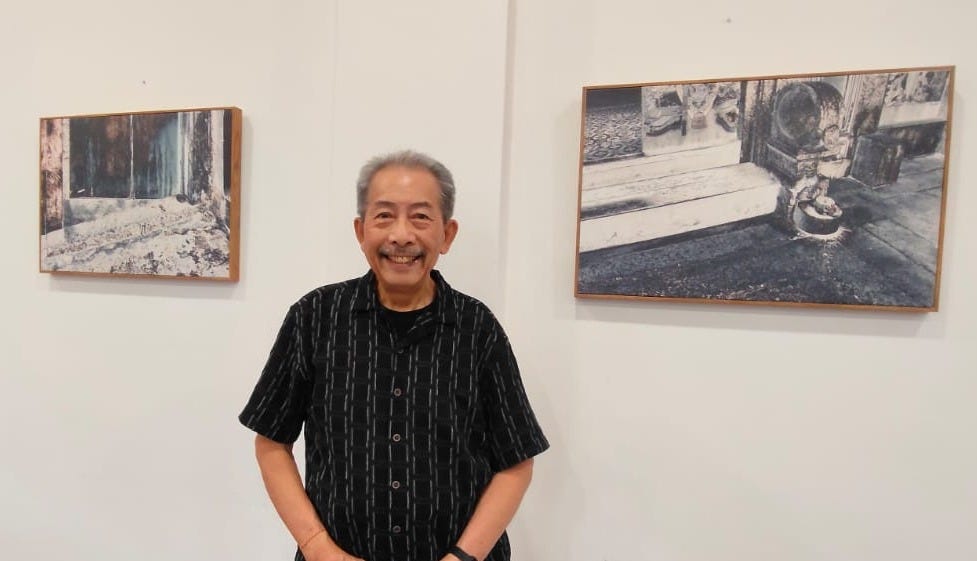
Choy, 73, better known as KF Choy, is a Penang-born photographer and fine-art printer whose six giclée prints on linen canvas are currently on show at For Our State: A Contemporary Photography Exhibition on Penang (Untuk Negeri Kita) at Penang Institute, George Town, running until Sept 27.
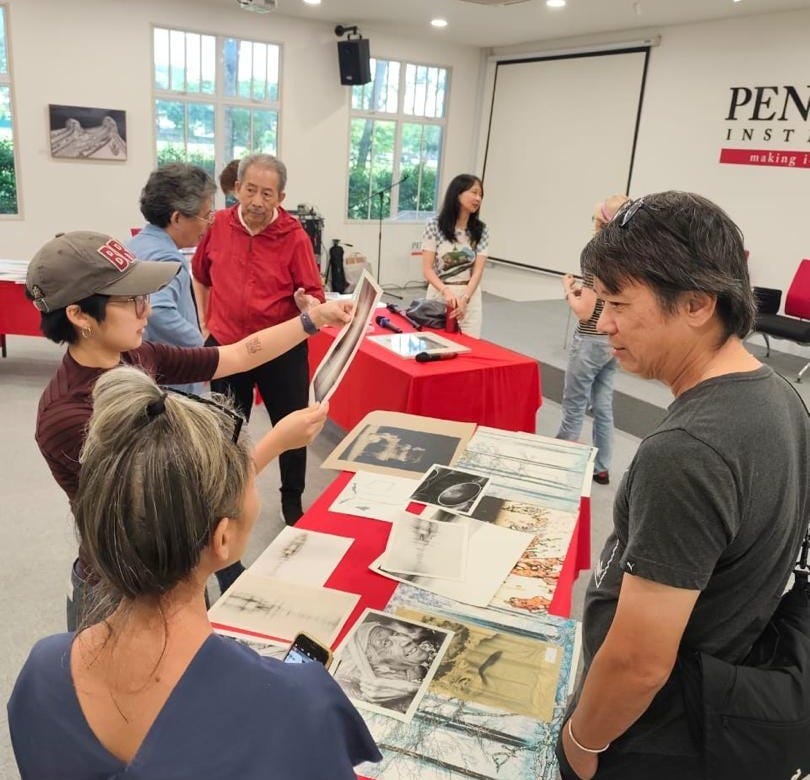
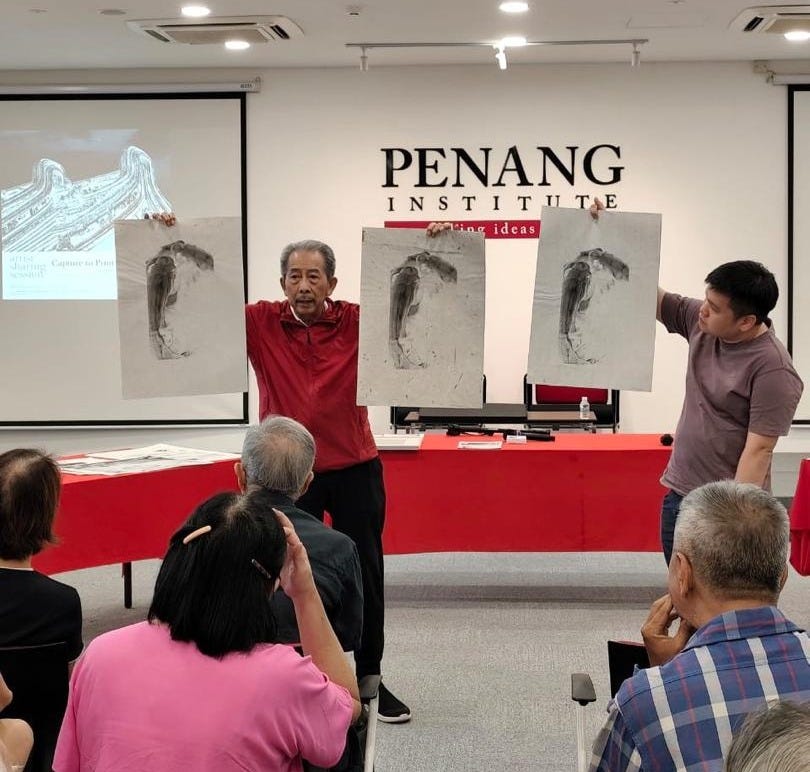
On Sept 19, he brought his fine-art printing practice to a roomful of photography hobbyists and enthusiasts at a workshop titled “Capture to Print”, exploring what happens when an image leaves the screen and takes on a physical form.
Participants were introduced to different materials and textures, including Xuan, mulberry and silk, to see how each could alter the character of a print.
“What do I want this work to become? What experience do I want it to create?” These were the questions Choy posed as he took participants through his approach to fine-art printing.
“Observation, Perception, Narrative, Material and Scale navigate my creative intent. Emotions and mood are the final narrative,” he said.
Materials create moods, creative intent
He demonstrated prints on fine-art 100% cotton rag paper, which is acid-free and free from optical brightening agents, as well as less conventional materials such as aluminium.
The choice of material affects how a work is seen and felt, he said. “Different materials, different moods, different creative intent. This changes the artist’s expression for viewers’ personal impression and emotions visually. Tactility is another important aspect,” he said.
Choy uses an inkjet printer with pigment ink for his fine-art printing, including across different substrates. He prefers pigment-based prints to dye-based prints for their quality and longevity.
But the technical process, he suggests, is not simply about eliminating imperfections.
Choy explained that even what might normally be regarded as a technical flaw can become part of the work. He demonstrated how bleeding can be allowed to remain as a characteristic of the material, particularly on absorbent surfaces, and discovered through test prints rather than eliminated at all costs. “Choice of paper becomes primary,” he said.
Christine Foong, a retired fashion designer and part-time lecturer in fashion design, who attended the workshop, said “Capture to Print” wasn’t just a sharing session.
“It was a revelatory look behind the lens of an industry master. Choy’s thoughtful choices of techniques to materials awed the audience. His creative intent and methodology was pure value without any fluff,” she said.
The use of aluminium caught her attention as it was one material she would not have thought possible. Foong said she would share what she learnt with her students.
Matthew Ong Soo Siew, also 60, said the workshop came at a different point in his photographic journey. A marketing professional in the chemical industry, Matthew has been passionate about street photography for more than 10 years. Yet he had never printed any of his photographs.
“I’ve always photographed and kept my work digitally, but I’ve never actually printed any of my photographs,” he said, adding that he was considering purchasing a printer and eventually printing and selling his work, holding a photo exhibition and publishing a book of his street photography.
Print an extension of creativity
His methodology, Choy explained, is tailored to each work and its creative intent. The material is therefore not merely a surface on which an image is reproduced; it becomes part of how the image communicates.
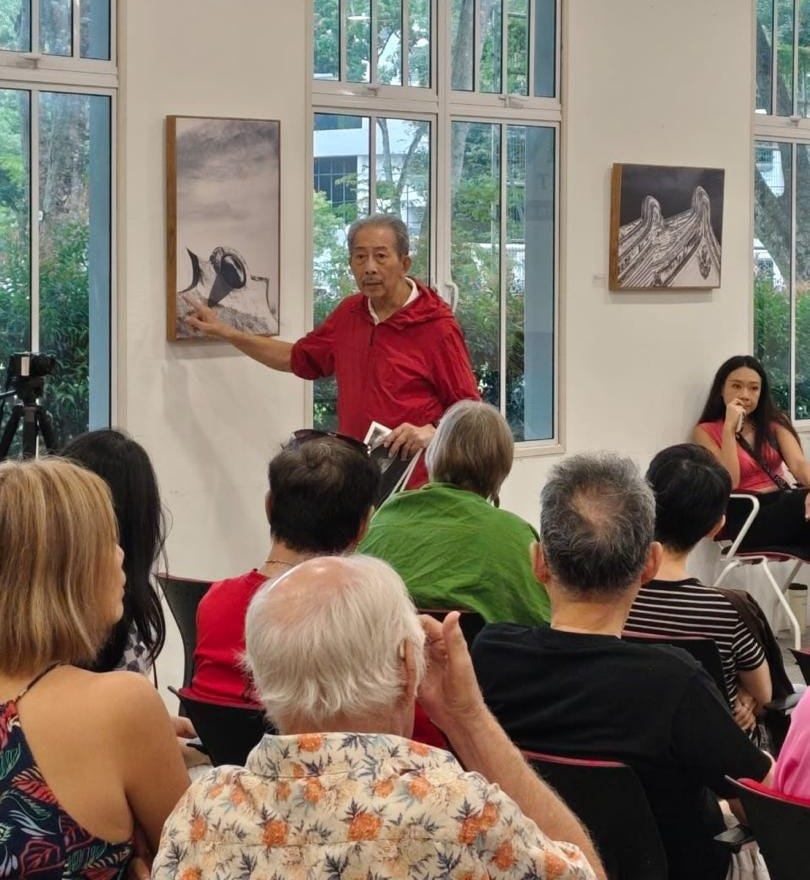
That shift in thinking is at the heart of fine-art printing — the photograph is no longer simply something viewed on a screen, but an object with its own texture, scale, presence and character.
For Choy, the journey from capture to print is therefore not a purely technical one. It is an extension of the photographer’s creative decision-making, where observation and perception lead to narrative, and material and scale help shape the final emotional experience.
For Our State runs daily until Sept 27 at Penang Institute, 10, Jalan Brown, George Town.
To read Penang's many voices, seen through art, click here.
All articles, opinions, and events featured in PostScript NAC represent the views of the interviewees, individual writers and contributors, and do not necessarily reflect those of PostScript NAC. While we strive to ensure all information on this post is accurate, complete, and current, PostScript NAC is not responsible for any errors, omissions, or outdated content.
